Your Cart is Empty


At a Glance: The best temperature to paint outside is when the surface sits between roughly 35 and 100 degrees Fahrenheit (1.7 to 38 degrees Celsius). The exact range depends on the type of paint, so always check its technical data sheet. Surface temperature and direct sunlight matter more than the number on the thermometer.
The ideal temperature for most exterior painting falls in a moderate band. For Benjamin Moore's retail exterior lines, the surface needs to stay above35 to 40 degrees Fahrenheit on the low end andbelow 100 degrees Fahrenheit on the high end.
Temperature matters because latex paint and acrylic paint need to cure properly as they dry. The water and solvents have to evaporate at the right pace for the paint film to form and bond. When conditions fall outside the range, a few things go wrong:
In cold weather and lower temperatures, the paint cannot form a proper film and may crack or fail to adhere.
In a high temperature, the paint dries too fast and can leave lap marks or weak adhesion.
Extreme temperatures at either end shorten the life of the paint job.
The short answer is a moderate, dry day under ideal conditions. The complete answer lives on each product's technical data sheet.
Every Benjamin Moore product has atechnical data sheet, often called a TDS. A TDS is a one-page document from the paint manufacturer that lists how to apply the product correctly.
For temperature questions, the TDS gives you three numbers that matter:
The minimum and maximum surface temperature for application
The drying time to the touch
The recoat time before a second coat
You can find a TDS by searching the product name plus "TDS," or by visiting theBenjamin Moore technical data sheet library. Within each product line, individual sheens can have slightly different minimum application temperatures, so check the specific TDS for the finish you are using.
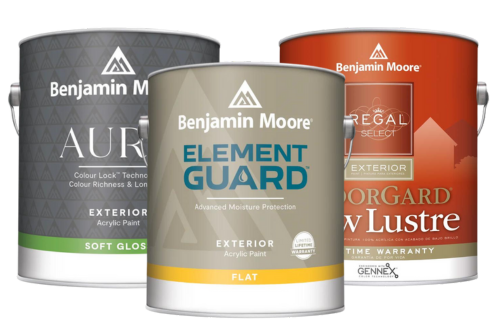
| Product Name | Min Temp | Max Temp |
|---|---|---|
| Aura Exterior Flat (N629) | 35°F | 100°F |
| Aura Exterior Low Lustre (N634) | 35°F | 100°F |
| Aura Exterior Satin (N631) | 35°F | 100°F |
| Aura Exterior Soft Gloss (N632) | 35°F | 100°F |
| Regal Select MoorLife Flat (W105) | 40°F | 100°F |
| Regal Select MoorGard Low Lustre (W103) | 35°F | 100°F |
| Regal Select MoorGlo Soft Gloss (W096) | 35°F | 100°F |
All sheens above max out at a 100°F surface temperature and dry to the touch in about 1–2 hours under standard conditions. Oil-based paint products have their own separate temperature ranges, so check the TDS if you are using one.

Exterior painting gets trickier during the summer months. The challenge is not just the air temperature. It is the surface temperature.
A wall sitting in direct sunlight can run far hotter than the air around it. On a 90 degree afternoon, a sun-baked wall can easily climb past the100 degree maximum listed on the TDS. That is why surface temperature, not air temperature, is the number that counts.
When paint goes on a surface that is too hot, it dries before it can level out. The result is lap marks, brush drag, and weaker adhesion over time. The same problem shows up across most outdoor projects in warmer weather.
A few ways to beat the heat on a summer paint job:
Start early in the morning while surfaces are still cool.
Follow the shade around the house as the sun moves.
Avoid painting walls in direct afternoon sun, especially during the hottest warmer temperatures of the day.
Touch the surface first. If it feels hot, wait for it to cool.
These habits keep the surface within range and give the paint time to dry the way it should.
Warm, dry, or windy conditions can cause water-based paint to dry faster than expected. Benjamin Moore Paint Extender can add open time to products like Aura and Regal Select, helping painters maintain a wet edge and achieve a smoother finish.
Ask the Clement’s Paint team whether extender is a good fit for your paint, surface, and application method.
Temperature is only part of the picture. Several weather conditions shape how well a coat of paint cures.
Direct sunlight: Heats the surface and speeds up drying, which can cause lap marks.
Rain: A wet surface ruins fresh paint. Check the weather forecast for a dry window that covers both the drying time and the recoat time.
Relative humidity: High humidity slows drying. The TDS notes that high humidity and low temperatures lengthen dry, recoat, and service times. Ideal humidity for exterior work runs below 50 percent.
Cold temperatures and colder weather: Below the minimum temperature, the paint will not form a proper film.
These factors interact. A cool morning with high humidity can still be a poor time to paint even when the temperature reads fine.
This is different from interior paint work, which usually happens indoors at room temperature and avoids most of these variables. Outdoor painting has to account for the full weather picture.

Run through a quick check before you open the can:
Confirm the air temperature sits inside the product's range.
Check the surface temperature, especially on sunny walls.
Scan the weather forecast for rain within the dry and recoat window.
Check the overnight low if you are painting late in the day.
Make sure relative humidity is not excessive.
When the air temperature, surface temperature, and forecast all line up, you have found the right temperature window and the optimal temperature for the job.
If the heat makes exterior painting harder,stain offers another path during the summer months. Warm, dry stretches are a good time for an outdoor painting project on decks, fences, and outdoor wood.
Some stains are also more forgiving in heat and humidity than paint. Clement's can walk you through which products hold up best for a summer outdoor project.
A few habits make any exterior painting project go smoother:
Start early in the day during the summer months.
Follow the shade around your home's exterior.
Skip any surface that feels hot to the touch.
Allow the full dry time and recoat time listed on the TDS.
Watch the weather forecast for a clear, dry window.
Prep the surface first. Clean, dry, sound surfaces hold paint best.
Timing an exterior paint job is easier with someone who knows the products. The team at Clement's Paint has been helping Central Texas painters since 1986.You do not have to figure out every temperature, humidity, and dry-time detail on your own. Bring your questions to one of ourClement’s Paint locations. Our team can help you choose the right Benjamin Moore product, understand your surface conditions, and decide whether it is the right time to start painting.
As Austin's oldestBenjamin Moore dealer, we carry the retail exterior lines built for our climate, includingAura Exterior andRegal Select Exterior, along withexterior stain for summer projects. We also stock the supplies you need from prep to final coat.
If you want help with color, we can connect you with a design professional for expert color consultation. We leave the brushwork to the pros and can refer you to atrusted professional painter for the application. Stop by one of our Austin or Marble Falls locations to talk through your project.
It depends on the specific paint and sheen. Within Benjamin Moore's retail exterior lines, all four sheens ofAura Exterior(Flat, Low Lustre, Satin, and Soft Gloss) go down to 35°F.Regal Select Exterior goes down to 35°F in MoorGard Low Lustre and MoorGlo Soft Gloss, while MoorLife Flat requires 40°F. Always confirm the minimum on the product's TDS before you start.
Yes, with the right timing. Keep the surface temperature below the 100°F maximum listed on the TDS for whichever sheen you are using. Paint in the morning, follow the shade, and avoid walls in direct afternoon sun.
In a high temperature, paint dries too fast and can show lap marks or poor adhesion. In cold temperatures and low temperatures generally, the paint cannot form a proper film and may crack or peel. Both extremes shorten the life of the paint job.
Yes. High humidity slows drying and recoat times. Plan for longer waits between coats on humid days, and always check the weather forecast for rain.


For 50 years, Benjamin Moore's Historical Color Collection has brought the character of 18th- and 19th-century design into modern homes. From the quiet confidence of Stonington Gray to the bold statement of Heritage Red, these are the shades that never go out of style. Take a look back at where the collection began, and discover the ten colors still shaping homes today.